
Food dehydrators efficiently reduce water content using heat and airflow, preserving foods like fruits, vegetables, and meats. This method extends shelf life significantly.
Historically, sun-drying was common, but modern dehydrators offer controlled, consistent results for optimal food preservation and snack creation.
What is a Food Dehydrator?
A food dehydrator is an appliance designed to remove moisture from food to preserve it. Unlike traditional methods, it utilizes a controlled heat source and consistent airflow. This process inhibits the growth of microorganisms, extending the food’s shelf life considerably.
Modern dehydrators offer precise temperature control and timers, ensuring optimal drying for various food types. They’ve evolved from simple sun-drying techniques, providing a convenient and reliable way to create snacks like jerky, fruit leather, and preserved produce. The core function remains the same: reducing water content.
Benefits of Using a Food Dehydrator
Utilizing a food dehydrator offers numerous advantages, primarily extending food’s shelf life and reducing waste. Dehydration concentrates flavors, creating intensely tasty snacks like fruit leathers and jerky. Lightweight dehydrated foods are ideal for hiking and camping, offering convenient nutrition on the go.
Furthermore, dehydrating allows you to preserve seasonal produce, enjoying your favorite fruits and vegetables year-round. It’s a healthier alternative to store-bought processed snacks, allowing control over ingredients and avoiding preservatives. Ultimately, it’s a cost-effective and rewarding preservation method.
Types of Food Dehydrators
Food dehydrators come in stackable, shelf-style, and rotating designs, each offering unique space and airflow characteristics for efficient food preservation.
Choosing the right type depends on your needs and the volume of food you plan to dehydrate regularly.
Stackable Food Dehydrators
Stackable dehydrators feature circular trays that interlock vertically, maximizing space efficiency, making them ideal for smaller kitchens. These models utilize a fan positioned at the base to circulate warm air upwards through the trays.
While generally more affordable, even drying can be a concern if trays are overloaded. Consistent rotation of the trays during the dehydration process is often recommended to ensure uniform results. They are a great entry point for beginners exploring food preservation, offering simplicity and convenience.
Shelf-Style Food Dehydrators
Shelf-style dehydrators are the most common type, featuring multiple horizontal trays where food is spread out for drying. A fan, typically located in the back, circulates air horizontally across the trays, ensuring even dehydration.
These models often offer larger capacities and more consistent results compared to stackable units. Many include digital controls for precise temperature and timer settings, enhancing usability. Stainless steel trays are a desirable feature for ease of cleaning and durability, contributing to long-term value.
Rotating Food Dehydrators
Rotating dehydrators utilize a rotating carousel design with trays stacked vertically around a central axis. A heating element and fan work together to circulate warm air, promoting even drying as the trays slowly rotate.
These models are often more compact, making them suitable for smaller kitchens. While capacity might be less than shelf-style units, the rotating action ensures consistent exposure to heat. They are generally simpler to operate, offering a user-friendly experience for beginners.
Preparing Food for Dehydration
Proper preparation is key! Select fresh produce, wash thoroughly, and consider pre-treatment methods to maintain color and flavor during the dehydration process.
Selecting Fresh Produce
Choosing high-quality produce is the foundation of successful dehydration. Opt for fruits and vegetables that are ripe, but not overripe, and free from blemishes or signs of spoilage. Firmness is crucial; avoid anything mushy or damaged.
For the best results, select produce at its peak season, as this ensures maximum flavor and nutrient content. Consider the water content – foods with higher water content will require longer dehydration times. Inspect carefully, discarding any pieces that show mold or decay, guaranteeing a safe and delicious final product.
Washing and Pre-Treatment
Thoroughly washing all produce is essential before dehydration to remove dirt, pesticides, and bacteria. A gentle scrub with cool water is usually sufficient. Pre-treatment helps prevent oxidation and preserves color and flavor.
For light-colored fruits like apples and peaches, a lemon juice dip (1 tablespoon per quart of water) is recommended. Blanching vegetables briefly in boiling water deactivates enzymes. Proper pre-treatment ensures vibrant, flavorful, and longer-lasting dehydrated foods, maximizing quality and safety.
Slicing and Preparation Techniques
Uniform slicing is crucial for even dehydration; aim for consistent thickness, typically ¼ to ½ inch. This ensures all pieces dry at the same rate, preventing some from becoming brittle while others remain moist.
Remove pits, cores, and seeds before slicing. For fruits, consider halving, slicing, or dicing. Vegetables may require peeling or trimming. Proper preparation maximizes surface area, accelerating the dehydration process and resulting in a superior final product.
Dehydration Process: Step-by-Step
Begin by arranging prepared food evenly on dehydrator trays, ensuring good airflow. Set the appropriate temperature and timer, then initiate the dehydration cycle.
Setting the Temperature
Temperature control is crucial for successful dehydration. Fruits generally require lower temperatures, typically between 135°F (57°C) and 175°F (79°C), to preserve flavor and color. Vegetables often need slightly higher settings, ranging from 125°F (52°C) to 195°F (90°C), depending on the type.
Meat, especially when making jerky, demands the highest temperatures, usually between 160°F (71°C) and 180°F (82°C), to ensure food safety. Digital models offer precise control, while simpler units may have limited settings. Always consult specific food dehydration guides for optimal temperatures.
Arranging Food on Trays
Proper tray arrangement is key for even dehydration. Arrange food in a single layer, ensuring pieces don’t overlap. This allows consistent airflow around each item. For smaller items like herbs or berries, consider using mesh liners to prevent them from falling through the trays.
Stainless steel trays are ideal for easy cleaning. Leave space between pieces for optimal air circulation. Rotate trays periodically during the dehydration process, especially in models without a fan, to promote uniform drying.
Dehydration Times for Different Foods
Dehydration times vary significantly based on food type and thickness. Fruits generally take 6-12 hours, while vegetables require 8-16 hours. Meats, like jerky, can take 4-8 hours at higher temperatures. Herbs dehydrate quickly, often in 2-4 hours.
Digital timer and temperature control are crucial for accuracy. Regularly check for desired texture – foods should be leathery or brittle. Adjust times as needed, considering humidity and initial moisture content. Consistent monitoring ensures optimal preservation.
Specific Food Dehydration Guides
Detailed guides are essential for optimal results. Fruits, vegetables, meats, and herbs each require unique preparation and dehydration parameters for best flavor and texture.
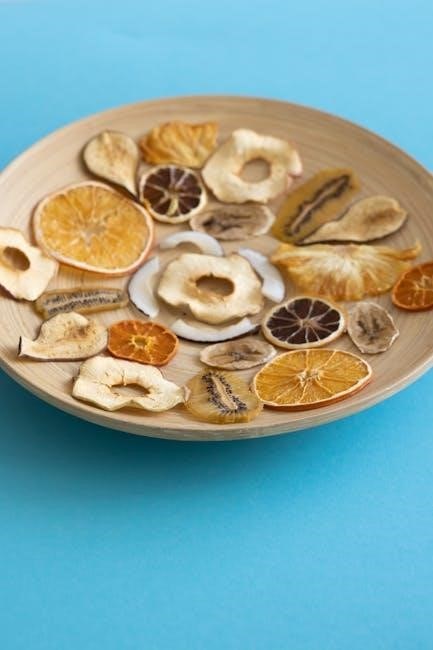
Dehydrating Fruits
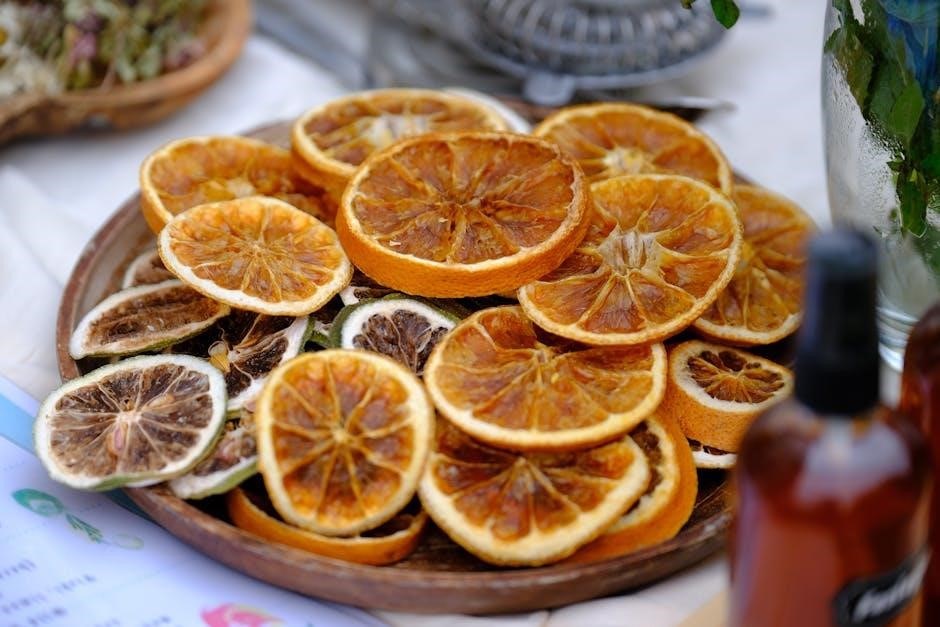
Fruit dehydration requires careful preparation for optimal sweetness and texture. Begin by selecting ripe, unblemished produce. Pre-treatment, like a lemon juice dip, prevents browning for lighter-colored fruits.
Slice fruits uniformly – approximately ¼ inch thick – to ensure even drying. Arrange slices in a single layer on dehydrator trays, avoiding overlap.
Dehydration times vary; apples typically take 6-12 hours at 135°F (57°C), while bananas require 8-16 hours at the same temperature. Check for pliability – fruits should be leathery but not brittle.
Dehydrating Vegetables
Vegetable dehydration demands blanching to halt enzyme activity, preserving color and nutrients. Blanching involves briefly boiling or steaming, followed by an ice bath.
Slice vegetables consistently – around ¼ inch thick – for uniform drying. Root vegetables like carrots may require thinner slices. Arrange in single layers on dehydrator trays, ensuring good airflow.
Dehydration temperatures generally range from 125°F to 135°F (52°C to 57°C), with times varying from 6 to 12+ hours depending on the vegetable type and thickness.
Dehydrating Meats (Jerky)
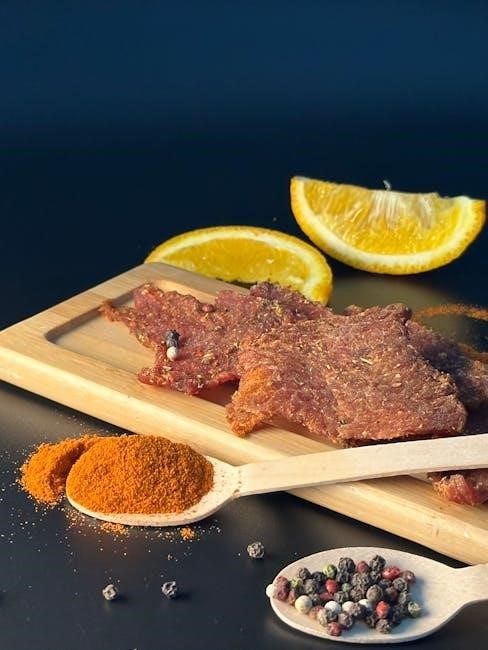
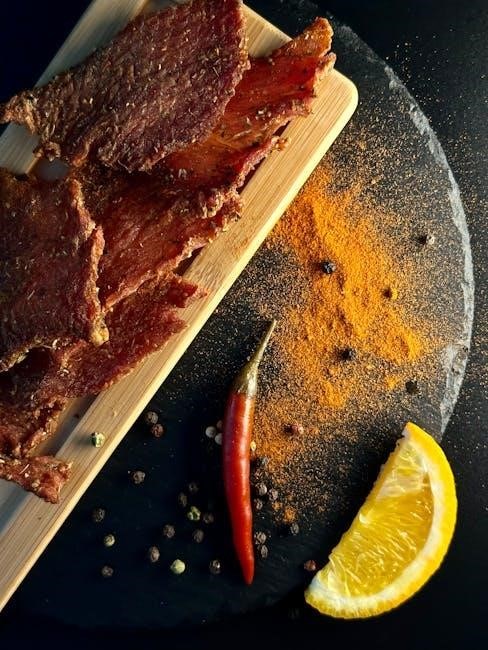
Meat dehydration, specifically jerky making, requires careful attention to food safety. Begin with lean cuts of meat, partially freezing them for easier slicing into ¼-inch strips with the grain.
Marinate the meat for at least four hours, or overnight, to enhance flavor and tenderize. Pat dry before arranging in a single layer on dehydrator trays, avoiding overlap.
Maintain a consistent temperature of 160°F (71°C) to eliminate bacteria. Dehydration typically takes 4-8 hours, depending on thickness and desired chewiness. Jerky should bend, not break.
Dehydrating Herbs
Dehydrating herbs preserves their potent flavors for long-term storage. Harvest herbs before flowering for maximum oil content. Gently wash and thoroughly dry the herbs, removing any damaged leaves.
Spread herbs in a single layer on dehydrator trays, ensuring good airflow. A low temperature, around 95-115°F (35-46°C), is ideal to prevent flavor loss.
Dehydration time varies, typically 2-4 hours, until the leaves crumble easily. Store dried herbs in airtight containers, away from light and heat, to maintain their aroma and potency.
Dehydrator Features & Controls
Digital controls offer precise temperature and timer settings, while stainless steel trays ensure durability and easy cleaning. A ‘keep warm’ function is also beneficial.
Digital Timer and Temperature Control
Precise control is paramount for successful dehydration, and digital timers and temperature settings deliver just that. Models like the NutriChef Dehydrator excel with this feature, simplifying the process for beginners.
Adjustable temperature ranges, typically from 95°F to 176°F, cater to diverse foods. Accurate timing prevents over or under-drying, crucial for texture and preservation. Digital displays offer clear readability and ease of operation, ensuring consistent results every time you dehydrate.
Stainless Steel Trays
Stainless steel trays are a superior choice for food dehydration due to their durability, hygiene, and ease of cleaning. The Magic Mill Dehydrator prominently features these trays, enhancing the overall user experience.
Unlike plastic alternatives, stainless steel doesn’t retain odors or stains, ensuring pure flavors in each batch. They are also non-reactive, preventing any unwanted chemical interactions with your food. Their robust construction withstands repeated use and simplifies maintenance, making them a long-lasting investment.
Keep Warm Setting
A keep warm setting is a convenient feature found on some dehydrators, like the Magic Mill Dehydrator, extending its functionality beyond simple dehydration. This allows you to maintain the temperature of already-dried foods for several hours.
This is particularly useful for keeping jerky or fruit snacks warm for immediate enjoyment or serving. It prevents them from cooling down and becoming less palatable. The setting operates at a low temperature, ensuring the food doesn’t continue to dry or burn, preserving its texture and flavor.
Safety Precautions
Food safety is paramount; always follow guidelines for proper handling and storage. Maintain your dehydrator regularly and prioritize electrical safety during operation.
Food Safety Guidelines
Maintaining food safety during dehydration is crucial to prevent spoilage and health risks. Thoroughly wash all produce before slicing, and consider pre-treatment methods like blanching for vegetables to halt enzyme activity.
Ensure meats reach safe internal temperatures during the dehydration process, especially when making jerky. Proper airflow is essential for consistent drying, minimizing bacterial growth.
Always use clean trays and equipment. Store dehydrated foods in airtight containers in a cool, dark, and dry place to maximize shelf life and prevent contamination.
Dehydrator Maintenance
Regular maintenance extends your dehydrator’s lifespan and ensures optimal performance. After each use, thoroughly clean the trays and interior with warm, soapy water. Stainless steel trays, like those found in the Magic Mill, are particularly easy to sanitize.
Check the fan for debris and ensure proper airflow. Inspect the heating element for any signs of damage. Avoid abrasive cleaners that could scratch surfaces.
Store the dehydrator in a clean, dry place when not in use. Following these steps will keep your dehydrator functioning efficiently for years.
Electrical Safety
Always prioritize electrical safety when operating your food dehydrator. Ensure the appliance is plugged into a grounded outlet and avoid using extension cords if possible. Never immerse the dehydrator base in water or any other liquid.
Inspect the power cord regularly for damage; if frayed or exposed wires are present, discontinue use immediately. Do not operate the dehydrator if it has been dropped or damaged in any way.
Unplug the unit when not in use and before cleaning. Following these precautions minimizes the risk of electrical shock.
Troubleshooting Common Issues
Uneven drying often requires rotating trays. Browning indicates too high a temperature. If the dehydrator won’t start, check the power connection.
Uneven Drying
Uneven drying is a common issue, often stemming from inconsistent food placement or airflow obstruction. To combat this, rotate the trays periodically during the dehydration process – typically halfway through the estimated drying time.
Ensure food pieces are uniformly sliced and not overcrowded on the trays, allowing for adequate air circulation around each item. Thicker pieces may require more time, so consider arranging similar thicknesses together.
Also, verify that the dehydrator’s fan is functioning correctly, as a weak fan can contribute to uneven results. Consistent monitoring and adjustment are key to achieving uniformly dried foods.
Food Browning Too Quickly
Premature browning often indicates the dehydrator temperature is set too high for the specific food being processed. Lowering the temperature is the first step to address this issue, especially for fruits sensitive to heat.
Consider pre-treating fruits with an ascorbic acid dip (Vitamin C) to inhibit oxidation and preserve color. Ensure adequate airflow around the food; overcrowding can trap heat and accelerate browning.
Regularly check the food’s progress and adjust the temperature accordingly. Some browning is natural, but excessive discoloration suggests adjustments are needed for optimal results.
Dehydrator Not Turning On
If your dehydrator fails to power on, first verify the power cord is securely plugged into both the dehydrator and a functioning electrical outlet. Test the outlet with another appliance to confirm it’s providing power.
Check the dehydrator’s internal fuse or circuit breaker, if equipped, and replace it if necessary. Some models feature an automatic shut-off; ensure all components are correctly assembled.
If the issue persists, consult the manufacturer’s instructions or contact customer support for assistance, as internal electrical problems require professional attention.
Storing Dehydrated Foods
Proper storage is crucial. Use airtight containers, like jars or vacuum-sealed bags, to maintain quality and prevent moisture reabsorption, extending shelf life.
Proper Storage Containers
Selecting the right container is paramount for maintaining the quality and extending the shelf life of your dehydrated foods. Airtight containers are essential to prevent moisture reabsorption, which can lead to spoilage or a loss of texture.
Glass jars with tight-fitting lids are an excellent choice, as are vacuum-sealed bags. These methods minimize exposure to air and humidity. Mylar bags, especially when combined with oxygen absorbers, provide superior long-term storage. Avoid using plastic containers that aren’t specifically designed for food storage, as they may not offer a sufficient barrier against moisture and oxygen.
Shelf Life of Dehydrated Foods
Properly stored dehydrated foods can last for extended periods, but shelf life varies depending on the food type and storage conditions. Fruits generally maintain quality for 6-12 months, while vegetables can last 1-2 years. Meats, like jerky, typically have a shelf life of 1-2 months, though this can be extended with proper vacuum sealing.
Storing in cool, dark, and dry conditions is crucial. Regularly inspect stored foods for any signs of spoilage, such as mold or off-odors. Utilizing oxygen absorbers within airtight containers significantly prolongs shelf life, ensuring long-term preservation.
Rehydrating Dehydrated Foods
Rehydrating dehydrated foods restores their texture and flavor, making them suitable for various recipes. The process typically involves soaking the food in warm water for a specific duration, varying based on the food type. Fruits often rehydrate quickly, within 30 minutes, while tougher vegetables or meats may require several hours.
For soups or stews, dehydrated ingredients can be added directly to the liquid. Remember that rehydrated foods will be softer than their fresh counterparts. Adjust cooking times accordingly, and consider the original water content when rehydrating for optimal results.

Recommended Dehydrator Models
NutriChef and Magic Mill are excellent choices for beginners, offering digital controls and stainless steel trays for easy, consistent dehydration results.
NutriChef Dehydrator
The NutriChef Dehydrator is frequently recommended for those new to food dehydration, praised for its user-friendly operation. Its key feature is the inclusion of a digital timer and temperature control, allowing precise adjustments for various food types – crucial for achieving optimal drying.
This model is particularly well-suited for hikers and outdoor enthusiasts seeking lightweight, shelf-stable snacks. Users report successful results with fruits, vegetables, and even jerky, thanks to the consistent heat distribution. Cleaning is also relatively straightforward, enhancing its overall appeal.
Magic Mill Dehydrator
The Magic Mill Dehydrator stands out as an excellent choice for beginners, requiring no prior experience to operate effectively. It boasts easy-to-clean stainless steel trays, a significant convenience for maintaining hygiene and simplifying the dehydration process.
The temperature range, spanning from 95°F to 176°F, provides versatility for dehydrating a wide array of foods. Furthermore, the inclusion of a keep warm setting adds functionality, allowing you to maintain food temperature after the dehydration cycle is complete, enhancing its usability.
Advanced Dehydration Techniques
Beyond basic drying, explore fruit leather creation, crispy vegetable chips, and even dehydrating soups and purees for lightweight, long-lasting meal options.
Making Fruit Leather
Fruit leather is a delicious and healthy snack created by pureeing fruit, spreading it thinly onto dehydrator trays lined with parchment paper or non-stick sheets, and drying it.
Typically, a temperature of 135°F (57°C) is ideal, with drying times ranging from 4 to 8 hours, depending on fruit thickness and dehydrator efficiency. Ensure the puree is consistent for even drying.
Once dried, the leather should be pliable but not sticky. Cool completely before peeling off the liner and rolling or cutting into desired shapes for convenient, portable treats.
Creating Vegetable Chips
Vegetable chips offer a healthy alternative to store-bought snacks. Slice vegetables like zucchini, beets, or sweet potatoes thinly and uniformly for consistent drying. Pre-treating with lemon juice can prevent browning.
Arrange slices in a single layer on dehydrator trays and set the temperature to 125°F (52°C). Drying times vary from 6 to 12 hours, depending on the vegetable and slice thickness.
Chips are done when crisp and brittle. Cool completely before storing in an airtight container to maintain their crunch and prevent moisture absorption, ensuring a satisfying snack.
Dehydrating Soups and Purees
Dehydrating soups and purees creates lightweight, convenient meal starters. Prepare your soup or puree as usual, aiming for 80-90% water reduction during cooking. This minimizes dehydration time.
Spread the mixture thinly – about ¼ inch – onto lined dehydrator trays (fruit leather sheets work well). Set the temperature to 135°F (57°C) and dehydrate for 6-12 hours.
The result should be a brittle, leathery sheet. Break into pieces, store airtight, and rehydrate with boiling water for a quick and flavorful soup or sauce base.