
Traxxas Slash Manual: A Comprehensive Guide
This comprehensive guide details setup, operation, maintenance, and troubleshooting for the Traxxas Slash, ensuring optimal performance and longevity of your radio-controlled truck.
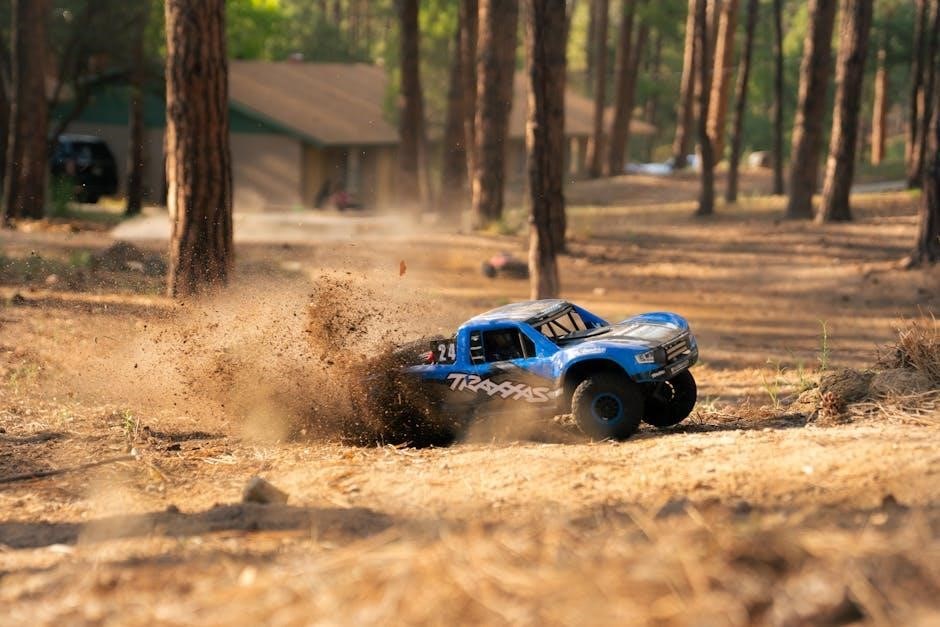
The Traxxas Slash is a popular 1/10 scale, short-course truck renowned for its durability, performance, and realistic appearance. Inspired by full-scale racing trucks, the Slash delivers an exhilarating off-road experience. This model, often equipped with the TRX 3.3 engine or Velineon brushless power system, caters to both beginners and experienced RC enthusiasts.
This manual provides essential information for owners, covering everything from initial setup and operation to advanced customization and troubleshooting. Whether you’ve just unboxed your Slash or are looking to enhance its capabilities, this guide will help you unlock its full potential. Understanding the truck’s features and following the instructions carefully will ensure years of enjoyment.
Understanding Slash Model Variations
The Traxxas Slash comes in several variations, each offering unique features and performance characteristics. Key distinctions include power systems – nitro (TRX 3.3 engine) versus electric (Velineon brushless). The 2WD and 4×4 models provide differing levels of traction and handling, impacting driving experience.
Further variations exist with different radio systems (TQ AM, TQi 2.4GHz) and optional features like Traxxas Stability Management (TSM). Some models, like the Ford Raptor edition, feature unique body styles and waterproof electronics. Identifying your specific Slash model is crucial for selecting the correct parts, accessories, and following appropriate maintenance procedures outlined in this manual.
Safety Precautions and Warnings
Prior to operation, carefully review all safety precautions. The Traxxas Slash is a powerful machine capable of significant speed and potential hazards. Always operate in a safe, open area away from people, pets, and property. Never operate near roads or waterways.
Inspect the model thoroughly before each use, checking for loose screws, damaged parts, and proper battery charge. Adult supervision is required for younger operators. Disconnect the battery when not in use. Avoid wet conditions unless your model has waterproof electronics. Follow all local laws and regulations regarding RC vehicle operation.

Setting Up Your Traxxas Slash
Proper setup is crucial for optimal performance. This section guides you through unboxing, battery charging, and connecting electronics for a seamless experience.
Unboxing and Initial Inspection
Carefully open the box and remove all components, verifying against the parts list included in the manual to ensure everything is present. Inspect the chassis for any shipping damage, paying close attention to suspension arms, shock towers, and the body.
Check the electronics – the motor, ESC (Electronic Speed Control), and servo – for loose wires or visible damage. Examine the tires for proper seating on the wheels and any manufacturing defects. Ensure the transmitter is included and appears undamaged.
Before proceeding, familiarize yourself with the basic components and their locations. A thorough initial inspection will prevent issues later and guarantee a smooth setup process. Retain the packaging for potential warranty claims or returns.
Battery Charging and Management
Utilize a Traxxas-approved charger designed for your specific battery type (NiMH or LiPo) to ensure safe and efficient charging. Always charge batteries in a fire-resistant location, away from flammable materials, and never leave them unattended during the charging process.
Monitor the battery’s temperature during charging; if it becomes excessively hot, disconnect it immediately. Understand the charging rates recommended for your battery and charger to avoid overcharging or damaging the battery.
Proper battery storage is crucial for longevity. Store batteries at a storage voltage when not in use, and avoid extreme temperatures. Regularly inspect batteries for swelling or damage, and dispose of them responsibly.
Installing Batteries and Connecting Electronics
Carefully install the battery pack(s) into the designated compartment, ensuring a secure connection. Connect the battery connector to the ESC (Electronic Speed Controller) following the correct polarity – typically red is positive and black is negative. Verify the connection is firm to prevent interruptions during operation.
Bind the transmitter to the receiver according to the instructions provided with your Traxxas TQi radio system. Ensure all servo connectors are securely plugged into the receiver, corresponding to their respective channels (steering, throttle, etc.).
Double-check all connections before powering on to avoid potential damage to the electronics.

Operating Your Traxxas Slash
Mastering the controls and settings unlocks the Slash’s full potential, allowing for precise steering, throttle control, and customized driving experiences with TSM technology.
Transmitter Controls and Functions
The Traxxas TQi transmitter is your command center for the Slash. Understanding its functions is crucial for optimal control. The throttle trigger controls acceleration and braking; pushing forward accelerates, while pulling back applies the brakes. Steering is managed via the steering wheel, offering precise directional control.
Adjustable settings include steering sensitivity and throttle endpoints, allowing customization to your driving style and terrain. The TQi system often features multiple driving modes, including Sport and Race modes, altering throttle and steering responsiveness. Familiarize yourself with the binding process to pair the transmitter with your Slash. Reverse functionality, activated via a button, allows for quick directional changes. Proper transmitter care, including battery management, ensures reliable operation.
Steering and Throttle Adjustments
Fine-tuning steering and throttle is essential for maximizing the Slash’s performance. Steering adjustments, typically found on the transmitter, control sensitivity and responsiveness. Increasing steering sensitivity allows for quicker turns, while reducing it provides more controlled handling. Throttle adjustments, including endpoints, limit the maximum throttle and brake application.
Endpoint settings prevent over-steering or excessive braking. Adjusting these ensures smooth, predictable control. Exponential settings modify the steering and throttle curves, offering finer control at low inputs and more aggressive response at higher inputs. Regularly check and adjust these settings based on driving surface and personal preference for optimal handling and control during operation.
Driving Modes and Settings (TSM, etc.)
The Traxxas Slash often features Traxxas Stability Management (TSM), a crucial driving aid. TSM utilizes sensors to automatically correct steering and throttle, enhancing stability, particularly on loose surfaces. Adjusting TSM sensitivity via the transmitter allows customization – higher sensitivity for more correction, lower for less intervention.
Other settings may include multi-select driving profiles, allowing you to store preferred configurations for different terrains or driving styles. Understanding these modes and settings is vital for optimizing performance. Experimenting with TSM and driving profiles unlocks the Slash’s full potential, providing a tailored driving experience and improved control in various conditions.

Maintenance and Repair
Regular cleaning, lubrication, and inspection of key components—tires, suspension, and drivetrain—are essential for maintaining peak performance and extending the life of your Slash.
Cleaning and Lubrication
Maintaining a clean Slash is crucial for optimal performance. After each run, thoroughly clean the chassis with a soft brush and mild soap, removing dirt, debris, and any accumulated grime. Pay close attention to the suspension components and drivetrain. Lubrication is equally important; use silicone oil or grease specifically designed for RC vehicles on suspension pivots, bearings, and gears. Avoid using petroleum-based lubricants as they can damage plastic parts.
Regularly inspect the motor for dust buildup and clean it with compressed air. Check the differential and apply grease as needed. Proper lubrication reduces friction, minimizes wear, and ensures smooth operation. Remember to wipe down the body shell to prevent scratches and maintain its appearance. Consistent cleaning and lubrication will significantly extend the lifespan of your Traxxas Slash.
Tire Management and Replacement
Proper tire management is vital for maintaining traction and control. Regularly inspect tires for wear, cuts, and embedded debris. Clean tires after each run to remove dirt and rocks that reduce grip. Monitor tire wear patterns; uneven wear indicates alignment issues or improper suspension settings. Rotate tires periodically to promote even wear and extend their lifespan.
When tires become excessively worn or damaged, replacement is necessary. Traxxas offers a variety of tire compounds and tread patterns to suit different terrains. Consider the type of surface you typically drive on when selecting replacement tires. Ensure proper tire gluing to the wheels for secure mounting. Properly maintained tires significantly enhance handling and overall driving experience with your Traxxas Slash.
Suspension System Maintenance
Regular suspension maintenance ensures optimal handling and performance. Periodically check shock absorbers for leaks and smooth operation. Disassemble shocks for cleaning and oil replacement every few runs, or when performance diminishes. Inspect suspension arms, hinge pins, and bearings for wear or damage. Replace worn parts promptly to prevent binding or reduced articulation.
Proper lubrication is crucial. Use silicone shock oil of the appropriate viscosity for your driving style and terrain. Apply grease to hinge pins and bearings to reduce friction and extend their life. Check for loose screws and tighten as needed. A well-maintained suspension system absorbs bumps effectively, providing improved control and a more enjoyable driving experience with your Traxxas Slash.

Troubleshooting Common Issues
This section provides solutions for typical problems like motor, ESC, steering servo, and battery issues, helping you quickly restore your Slash’s functionality.
Motor and ESC Troubleshooting
Addressing motor and Electronic Speed Controller (ESC) problems is crucial for maintaining your Traxxas Slash’s performance. If the motor isn’t running, first check the battery connection and ensure it’s fully charged. Verify the motor wires are securely connected to the ESC. Overheating can indicate excessive load or insufficient cooling; consider a heat sink or gear adjustment.
ESC issues often manifest as erratic behavior or a lack of response. Confirm the ESC is properly programmed according to the manual, paying attention to throttle endpoints and brake settings. If the ESC beeps continuously, consult the manual for error code definitions; Inspect the ESC for physical damage, and ensure it’s adequately cooled. A failing ESC may require replacement to restore full functionality.
Steering Servo Problems
Troubleshooting steering servo issues begins with verifying power delivery and linkage integrity. Ensure the servo is receiving adequate voltage from the receiver. Check the servo saver for proper tension; excessive play can cause imprecise steering. Inspect the steering links and knuckles for binding or damage, hindering smooth operation.
If the servo is unresponsive or erratic, recalibrate it using the transmitter. Confirm the servo endpoints are correctly set to maximize steering range. A clicking sound may indicate a stripped gear within the servo, necessitating replacement. Regularly clean and lubricate the servo gears to prevent binding and extend its lifespan. Consider a higher-torque servo for improved performance and durability.
Battery and Charging Issues
Addressing battery and charging problems starts with verifying compatibility between the battery, charger, and ESC. Always use a Traxxas-approved charger designed for the specific battery type (NiMH or LiPo). Incorrect charging settings can damage the battery or create a fire hazard. If the battery isn’t charging, inspect the charger’s connections and power source.
Reduced run times often indicate a declining battery capacity; consider replacement. Swollen or damaged batteries should be immediately discontinued from use and disposed of properly. Ensure proper battery storage practices, avoiding extreme temperatures. Regularly check battery voltage to assess its health and prevent over-discharge, which can shorten its lifespan.
Advanced Customization
Unlock your Slash’s full potential with upgrades to suspension, motors, and ESCs, alongside personalized body customization through painting and unique designs;
Upgrading Suspension Components
Enhance your Traxxas Slash’s handling and performance by upgrading its suspension system. Consider replacing stock shocks with adjustable big bore shocks for improved damping and tunability, allowing precise control over rebound and compression. Stiffer springs can reduce body roll during cornering, while adjustable turnbuckles enable fine-tuning of camber and toe angles.
Upgrading to aluminum shock towers provides increased durability and mounting points for various shock configurations. Replacing the stock plastic suspension arms with stronger aluminum or composite alternatives minimizes flex and improves responsiveness. Don’t forget to consider sway bars to further reduce body roll and enhance stability, especially during high-speed maneuvers. Careful selection and installation of these components will dramatically improve your Slash’s performance on any terrain.
Motor and ESC Upgrades
Unlock greater speed and power with motor and ESC (Electronic Speed Controller) upgrades for your Traxxas Slash. Brushless motors offer significantly more efficiency and torque compared to brushed motors, resulting in increased performance. When upgrading the motor, ensure the ESC is capable of handling the increased current draw; a higher amperage ESC is crucial.
Consider a sensorless or sensored brushless system for smoother operation and improved low-speed control. Gear mesh adjustments are vital after a motor swap to prevent damage. Upgrading to a more powerful motor and ESC often necessitates stronger drivetrain components, like upgraded gears and axles, to handle the increased stress. Always check your battery’s voltage and C-rating to match the new system’s requirements for optimal performance and longevity.
Body Customization and Painting
Personalize your Traxxas Slash with custom body painting and modifications! Begin with thorough body preparation: wash with dish soap, then lightly sand the interior for better paint adhesion. Apply multiple thin coats of polycarbonate paint, allowing each coat to dry completely before applying the next. Use masking tape to create clean lines for intricate designs.
Consider using polycarbonate-specific paints for durability and flexibility. After painting, apply a protective clear coat to prevent chipping. Body posts can be adjusted for optimal fit. Add realistic details with decals and accessories. Remember to trim the body carefully to ensure proper clearance and functionality, avoiding interference with suspension components or wheels.

Traxxas Slash Parts and Accessories
Locate genuine Traxxas parts and performance upgrades easily through their website or local hobby shops, maximizing your Slash’s potential and ensuring compatibility.

Finding Replacement Parts
Securing replacement parts for your Traxxas Slash is crucial for maintaining its performance and extending its lifespan. Traxxas offers a robust online parts catalog, searchable by model and component, ensuring you find the exact item needed. Alternatively, authorized Traxxas hobby dealers provide expert assistance and readily available stock.
When ordering, always verify the part number to guarantee compatibility. Websites specializing in RC parts also carry Traxxas components, offering competitive pricing and a wider selection. Remember to consider wear and tear on frequently used parts like tires, suspension arms, and drive shafts, proactively replacing them to prevent unexpected failures during operation. Prioritize genuine Traxxas parts for optimal fit and durability, safeguarding your investment and ensuring continued enjoyment of your Slash.
Recommended Accessories
Enhance your Traxxas Slash experience with a selection of recommended accessories. A Traxxas Link Wireless Module allows for detailed telemetry and tuning adjustments via your smartphone or computer. Consider investing in additional battery packs for extended run times, alongside a compatible smart charger for efficient and safe charging.
For maintenance, a comprehensive tool set specifically designed for RC vehicles is invaluable. Silicone shock oil of varying viscosities enables fine-tuning of the suspension. Protective features like a carrying bag and body protectors will safeguard your Slash during transport and crashes. Finally, explore optional tires suited to different terrains, maximizing traction and performance on various surfaces, ultimately elevating your RC enjoyment.
Traxxas Support and Resources
Traxxas provides extensive support for Slash owners; The official Traxxas website (traxxas.com) hosts a vast library of manuals, including those for the Nitro Slash, Slash 4×4 VXL, and older models with TQ AM radios. You’ll find detailed parts lists, exploded views, and downloadable PDFs for easy access.
Their support team is readily available via phone or email to address specific questions or concerns. The Traxxas forums are a vibrant community where users share tips, modifications, and troubleshooting advice. Furthermore, local hobby shops often carry Traxxas parts and offer expert assistance. Utilize these resources to ensure a smooth and enjoyable experience with your Traxxas Slash.