Singer Sewing Machine Manuals: A Comprehensive Guide
Navigating the world of vintage Singer sewing machines often begins with locating the correct manual. These guides are crucial for understanding operation, maintenance, and troubleshooting – ensuring your machine’s longevity and optimal performance.
Understanding Singer Model and Serial Numbers

Singer sewing machines utilize a complex numbering system to identify specific models and production dates; Deciphering these numbers – both model and serial – is fundamental to locating the correct manuals and parts. Model numbers often combine a “Class” number (like 15 or 66) with location codes (like ‘K’ for Kilbourn, Illinois, or ‘J’ for Clydebank, Scotland) and sub-version identifiers.
Serial numbers, conversely, primarily indicate the manufacturing year. These are typically found on a plate affixed to the machine. Understanding the serial number’s format is key; early machines have simpler numbers, while later models incorporate letters preceding the digits. Resources like the International Sewing Machine Collectors Society (ISMCS) provide charts correlating serial number ranges with approximate production years.
It’s important to note that machines of the same “Class” but different sub-versions may have varying parts, even if manufactured in the same location. Therefore, precise identification via both model and serial numbers is vital when seeking manuals or replacement components. Abbreviated model numbers were also common, adding another layer of complexity to the identification process.
Decoding Singer Serial Numbers for Age Identification
Singer serial numbers are the primary key to estimating a machine’s age. Early Singer machines featured straightforward sequential numbering. However, as production increased, the system evolved to incorporate letters preceding the numbers, indicating the year of manufacture. Determining the age isn’t always precise, as serial number ranges can overlap, and records aren’t always complete.
For example, a serial number beginning with “B” often suggests a production date around 1905, as evidenced by examples like B1109891 and B1500939. Online databases and resources, particularly those offered by the International Sewing Machine Collectors Society (ISMCS), provide detailed charts correlating serial number prefixes and ranges with specific years.
It’s crucial to remember that these are estimations. Variations can occur due to production schedules and factory practices. A thorough search using the serial number, combined with the model number, will yield the most accurate approximation of the machine’s age. This information is invaluable when sourcing appropriate manuals and parts.
Utilizing Online Databases for Singer Model Identification
Successfully identifying a Singer sewing machine model often relies on leveraging the wealth of information available in online databases. These resources are invaluable when original markings are faded, missing, or unclear. Several websites specialize in cataloging Singer models, cross-referencing serial numbers, and providing detailed specifications.
A prominent resource is the International Sewing Machine Collectors Society (ISMCS), which offers comprehensive charts and data correlating serial numbers with production years and specific models. Other online databases allow users to input serial numbers and receive potential model matches, aiding in the identification process. These databases frequently include images and descriptions, assisting in visual confirmation.
However, it’s important to note that information can vary between databases. Cross-referencing data from multiple sources is recommended for accuracy. Remember that identifying the model is crucial for locating the correct manual, ensuring proper operation, maintenance, and access to compatible parts. Careful research yields the best results.
The International Sewing Machine Collectors Society (ISMCS) Resources
The International Sewing Machine Collectors Society (ISMCS) stands as a premier resource for Singer sewing machine enthusiasts and manual seekers. This organization provides a wealth of information, including detailed model charts, serial number databases, and historical documentation crucial for identification and restoration.
ISMCS resources extend beyond simple model identification. They offer access to specialized knowledge regarding Singer’s manufacturing processes, variations within model classes, and the nuances of dating machines based on serial number prefixes and suffixes. Members benefit from exclusive access to detailed publications, forums, and expert advice from seasoned collectors.
For manual acquisition, the ISMCS often facilitates the exchange of information regarding manual locations and availability. While they don’t directly sell manuals, their network can connect you with individuals possessing original copies or knowledge of where to find them. Membership provides invaluable support for anyone seriously involved in collecting or restoring vintage Singer machines.
Singer Class Numbers: A Detailed Explanation
Singer class numbers represent a fundamental aspect of identifying and understanding these machines. These numbers, like “15” or “66”, denote the basic mechanical design and functionality of a particular Singer model. However, a class number alone isn’t sufficient for complete identification; it’s the foundation upon which further distinctions are built.
Understanding that machines of the same class share core features is vital. For example, a 15-80, 15K80, or 15J80 all fall under the “15” class, meaning their fundamental mechanics are identical. The letters following the dash (like ‘K’ or ‘J’) indicate the factory location where the machine was manufactured – ‘K’ for Clydebank, Scotland, and ‘J’ for Podolsk, Russia, for instance.
Further numerical extensions, such as “-80” or “-91”, represent sub-versions within the class. These sub-versions often indicate minor modifications or improvements made over time, potentially affecting part compatibility. Manuals frequently reference these class and sub-version numbers, making accurate identification essential for finding the correct documentation and replacement parts.
Sub-Versions and Part Compatibility within Singer Classes
Delving deeper into Singer machine identification, understanding sub-versions is crucial for successful restoration and repair. While machines within the same class share a core mechanical design, sub-versions – denoted by numbers following the class and location code (e.g., 15K81 vs. 15K80) – indicate specific modifications.
These modifications, though seemingly minor, can significantly impact part compatibility. A 15K80 isn’t necessarily interchangeable with a 15K81, even though both are part of the 15K class. Internal components, while appearing similar, may have subtle dimensional differences rendering them unusable.
Consequently, when sourcing replacement parts or consulting a manual, precise sub-version identification is paramount. Manuals often detail the specific parts applicable to each sub-version. Ignoring this detail can lead to frustration and incorrect installations. The factory often made changes even within the same factory, so knowing the exact sub-version is key.
Therefore, careful examination of the machine’s markings and cross-referencing with reliable databases or the ISMCS resources are vital steps before undertaking any repair or restoration work.
Common Singer Model Number Abbreviations
Singer model numbers, while seemingly straightforward, frequently employ abbreviations that can confuse those unfamiliar with the system. Understanding these shortcuts is essential when searching for manuals or replacement parts. The “Class” number, representing the fundamental machine design, is often used independently, like simply stating “Class 15.”
This abbreviation omits the location code (e.g., ‘K’ for Kilmarnock, Scotland; ‘J’ for Elizabethport, New Jersey) and the sub-version number. Consequently, a “Class 15” could refer to numerous variations. Similarly, “15-80” represents a common shorthand, combining the Class and a key sub-version identifier.
Further complicating matters, manufacturers often abbreviated the full model number to just the Class number or the Class plus the location code. For example, “15K” might be used instead of “15K80”. Manuals themselves sometimes utilize these abbreviated forms, requiring careful interpretation.
Therefore, when referencing a manual or seeking parts, always cross-reference the abbreviated number with the complete model number, if known, to ensure compatibility and avoid errors. Accurate identification is paramount for successful machine maintenance.
Locating Original Singer Sewing Machine Manuals
Finding original Singer sewing machine manuals can be a rewarding, though sometimes challenging, endeavor. The quest often begins with recognizing that manuals weren’t always meticulously preserved alongside the machines themselves. Consequently, several avenues must be explored to increase the chances of success.
Antique shops and flea markets specializing in vintage items frequently harbor forgotten manuals. Estate sales represent another promising source, as they often contain household goods from previous generations. Online auction sites, like eBay, are also valuable resources, though careful scrutiny of the listing details is crucial to confirm the manual’s accuracy and condition.
Networking with fellow sewing machine enthusiasts and collectors can prove invaluable. Online forums and communities dedicated to vintage Singers often facilitate the exchange of information and resources, including manual locations. Patience and persistence are key, as locating a specific manual can take time and effort.
Remember to verify the manual’s compatibility with your machine’s specific model and serial number before purchasing, ensuring a perfect fit for your restoration or maintenance needs.
Free Online Singer Manual Resources
Fortunately, a wealth of free online resources exists for those seeking Singer sewing machine manuals. These digital repositories offer convenient access to a vast collection of documentation, eliminating the need for costly purchases or extensive physical searches.
Several websites specialize in hosting vintage manuals, providing downloadable PDFs for numerous Singer models. These platforms often categorize manuals by model number or class, simplifying the search process. A particularly valuable resource is the International Sewing Machine Collectors Society (ISMCS), which offers a substantial library of manuals to its members and sometimes provides limited access to non-members.
Internet Archive, a digital library, also contains a growing collection of scanned Singer manuals, accessible to the public. Online forums dedicated to vintage sewing machines frequently feature shared links to free manuals and resources. However, exercise caution when downloading files from unfamiliar sources, ensuring your device remains protected from potential malware.
While the quality and completeness of free manuals may vary, they represent an excellent starting point for understanding and maintaining your Singer machine.
Paid Digital Singer Manual Downloads
While numerous free resources exist, sometimes a higher-quality or more comprehensive manual necessitates a paid digital download. Several online vendors specialize in offering digitized versions of original Singer sewing machine manuals, often providing clearer scans and more complete documentation than freely available options.
These paid resources frequently include manuals for rarer models or specific attachments that are difficult to locate elsewhere. Websites dedicated to vintage sewing machine parts and supplies often offer digital manuals as an add-on purchase. The benefit of a paid download lies in the assurance of a clean, readable file, free from the inconsistencies sometimes found in scanned copies.
Costs for digital manuals can vary significantly, depending on the model’s rarity and the vendor’s pricing structure. Before purchasing, carefully review the product description to ensure the manual covers your specific machine’s model and serial number. Consider checking user reviews or forums for feedback on the vendor’s reliability and the quality of their digital products.
Paying for a manual can be a worthwhile investment for serious collectors or those undertaking extensive machine restoration projects.
Purchasing Physical Copies of Vintage Singer Manuals
For purists and those who prefer a tangible resource, acquiring original physical copies of Singer sewing machine manuals remains a popular option. These manuals offer an authentic experience and can be a valuable addition to any Singer collection. However, locating them requires patience and diligent searching.
Online auction sites, such as eBay, are prime locations for finding vintage manuals. Antique shops, flea markets, and estate sales can also yield results, though availability is often unpredictable. Specialist vintage sewing machine dealers frequently stock original manuals, often at a premium price reflecting their condition and rarity.
When purchasing a physical manual, carefully assess its condition. Look for signs of wear and tear, such as tears, stains, or missing pages. A well-preserved manual will command a higher price. Verify that the manual corresponds to your specific Singer model number and, if possible, its serial number range.
Be prepared to pay a variable price, influenced by the manual’s rarity, condition, and the seller’s discretion. Patience and thorough research are key to securing a genuine and useful vintage Singer manual.
Identifying Manuals by Model Number
Precisely identifying the correct manual for your Singer sewing machine hinges on accurately determining its model number. This number, often found on a plate affixed to the machine, is the primary key to unlocking the appropriate documentation. However, Singer’s numbering system can be complex, incorporating class numbers, sub-versions, and location codes.
Begin by locating the complete model number. It might appear as “15-91,” “15K81,” or a similar combination. The initial number typically represents the ‘class’ of the machine, indicating its general design. Subsequent letters and numbers denote sub-versions and the factory location where it was manufactured. Understanding these components is crucial.
When searching for a manual, prioritize using the full model number. A manual specifically for a “15-91” will be more accurate than one simply labeled “Class 15.” Online resources and databases often allow searches by model number, streamlining the process.
Remember that abbreviations were common. A manual listed for “Class 15” might cover several sub-versions, but a dedicated manual for your specific model is always preferable for detailed instructions and part information.
Singer Featherweight Manuals: Specific Considerations
Singer Featherweight sewing machines, renowned for their portability and durability, present unique considerations when sourcing manuals. Due to their enduring popularity, Featherweight manuals are frequently reproduced, and identifying original versus reproduction copies is vital for accuracy.
Original Featherweight manuals typically feature a distinct paper stock and printing quality, reflecting the era of their production. They often exhibit signs of wear consistent with age, such as slight yellowing or minor imperfections. Reproduction manuals, while useful, may lack these authentic characteristics.
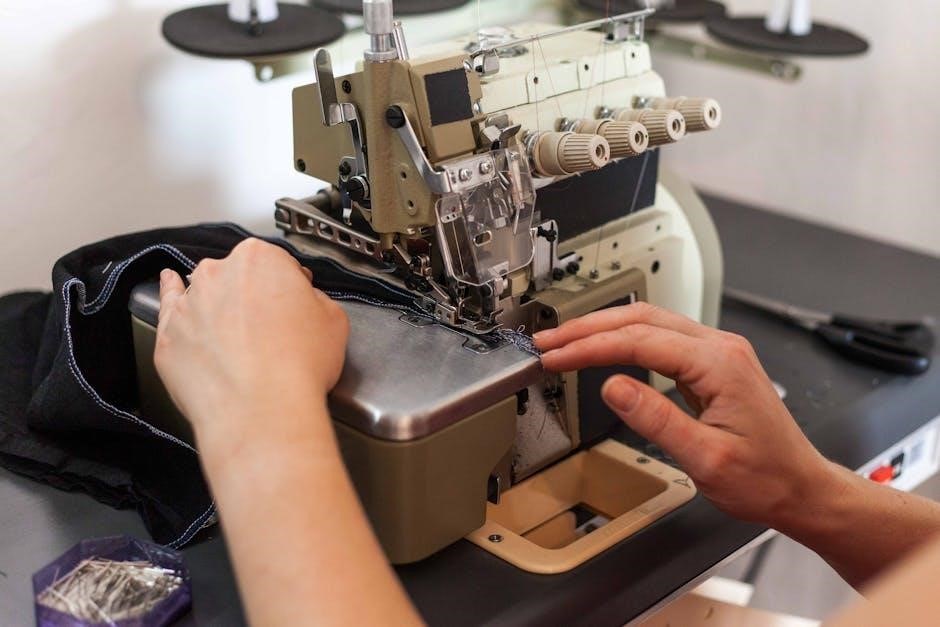
The Featherweight model 221 and its variations (221K, 222K) share a core manual, but supplemental inserts or addenda might exist for specific sub-versions or features. Ensure the manual covers your machine’s exact model number and any unique attachments.
When purchasing, carefully examine the manual’s condition and compare it to images of known original copies. Online forums and collector communities can provide valuable insights and authentication assistance. Prioritize authenticity for the most accurate guidance on maintenance and repair.
Singer Industrial Machine Manuals: Where to Find Them
Locating manuals for Singer industrial sewing machines can be more challenging than finding those for domestic models, due to their specialized nature and often limited production runs. However, several resources cater to industrial machine enthusiasts and professionals.
The International Sewing Machine Collectors Society (ISMCS) remains a primary source, offering access to a vast archive of manuals, including many industrial models. Their website and publications are invaluable for research and identification.
Specialized industrial sewing machine parts suppliers frequently stock or can direct you to relevant manuals. These suppliers often cater to the garment industry and possess extensive knowledge of Singer’s industrial line.
Online auction sites, like eBay, and vintage machinery marketplaces can yield original manuals, but careful verification of model compatibility is crucial. Digital downloads are also available from various online retailers, though quality and accuracy can vary.
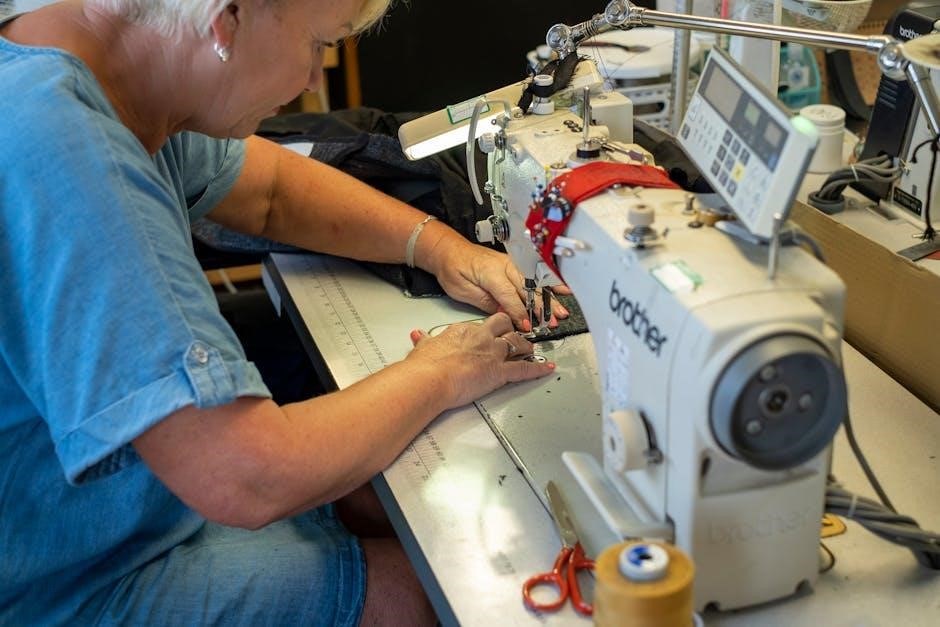
Remember to specify the exact model number and any associated class numbers when searching, as Singer industrial machines have complex naming conventions.
Troubleshooting Common Singer Machine Issues (Manual Assistance)
Singer sewing machine manuals are indispensable tools when encountering operational difficulties. They provide detailed diagrams and step-by-step instructions for diagnosing and resolving common problems, ranging from thread tension issues to motor malfunctions.
Manuals often include sections dedicated to troubleshooting, outlining potential causes for specific symptoms and offering corresponding solutions. These sections typically cover issues like skipped stitches, broken needles, and erratic stitching patterns.
Understanding the manual’s guidance on lubrication is crucial, as improper lubrication is a frequent cause of mechanical problems. Manuals specify the correct types of oil and greases, as well as lubrication points.

For electrical issues, manuals provide wiring diagrams and safety precautions. However, electrical repairs should only be attempted by qualified individuals.

Referencing the manual’s parts list can help identify damaged or worn components requiring replacement. Correct part identification is essential for successful repairs and maintaining machine functionality.
Understanding Singer Attachment Manuals
Singer attachment manuals are specialized guides detailing the use of various presser feet, needles, and other accessories designed to expand the functionality of your sewing machine. These manuals often accompany specific attachment sets or are available as standalone publications.
They illustrate how each attachment modifies the machine’s stitching capabilities, enabling tasks like creating decorative stitches, gathering fabric, or applying zippers. Detailed diagrams demonstrate proper attachment installation and operation.
Understanding the purpose of each attachment is key to achieving desired sewing results. Manuals explain which attachments are suitable for different fabrics and projects, preventing damage to both the machine and materials.
Many vintage Singer machines came with extensive accessory kits, and the corresponding attachment manuals are vital for unlocking their full potential. They provide a comprehensive overview of the available options.
Locating the correct attachment manual for your machine and accessories ensures you can utilize them effectively and maintain the quality of your sewing projects. Proper use extends the life of both the attachments and the machine.
Restoring and Maintaining Vintage Singer Machines with Manuals
Vintage Singer sewing machines, while durable, require careful restoration and regular maintenance to ensure continued operation. Original manuals are invaluable resources during this process, providing detailed instructions for disassembly, cleaning, and lubrication.
Manuals outline the correct procedures for removing and reassembling machine components, minimizing the risk of damage or lost parts. They specify the appropriate types of oil and grease for lubrication, preventing corrosion and ensuring smooth movement.
Troubleshooting sections within the manuals assist in diagnosing and resolving common mechanical issues. Diagrams illustrate the location of key parts and their functions, aiding in repairs.
Restoration often involves replacing worn or damaged parts. Manuals can help identify compatible replacements, ensuring proper fit and functionality. Understanding the machine’s original specifications is crucial.
Consistent maintenance, guided by the manual, prevents future problems and extends the machine’s lifespan. Regular cleaning, oiling, and adjustment preserve its performance and value, allowing it to be enjoyed for generations.