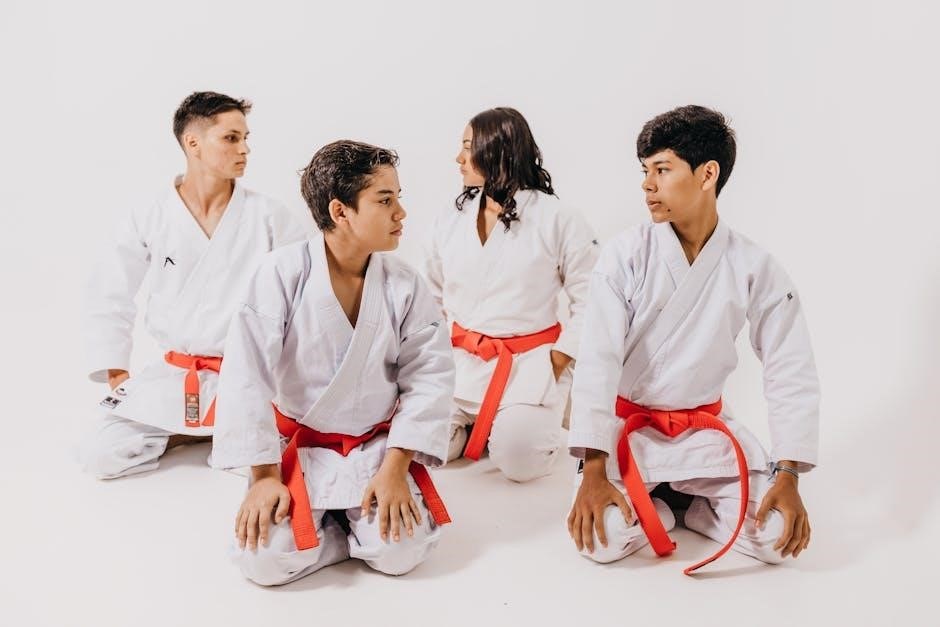
Karate Uniform Size Guide: A Comprehensive Overview (Updated 02/16/2026)
Navigating karate gi sizing can be tricky, as charts vary between manufacturers and styles.
This guide provides essential information for a comfortable, functional fit,
considering height, chest, waist, and inseam measurements for all levels.
Understanding Karate Gi Sizing
Karate gi sizing isn’t simply about your usual clothing size; it’s a specialized process. Accurate sizing ensures optimal performance and comfort during training.
Manufacturers employ varying charts, making standardization a challenge. Typically, sizing relies heavily on height, but chest/arm span and waist measurements are crucial for a proper fit.
Beginners often start with middle-weight gis (8.5oz), suitable for white and yellow belts.
Understanding size ranges, like 150cm-160cm, indicates the height bracket a gi is designed for.
A size 160cm gi, for example, suits individuals between 150cm and 160cm, allowing room for movement and growth.
Why Accurate Sizing Matters
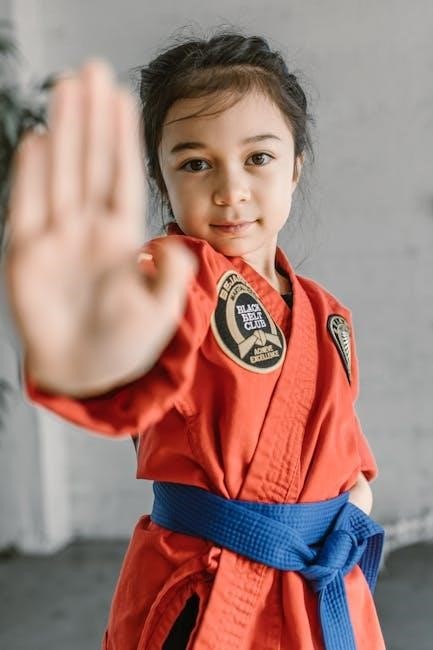
Properly sized gis are fundamental to effective karate training. A gi that’s too small restricts movement, hindering technique and potentially causing injury. Conversely, an oversized gi can be cumbersome and create a safety hazard, impacting balance and control.
Accurate sizing allows for a full range of motion during kata and kumite.
It ensures the jacket and pants don’t interfere with stances or strikes.
Choosing the right size demonstrates respect for the art and your training partners, fostering a safe and productive learning environment.
Standard Karate Gi Materials and Weight
Karate gis are traditionally constructed from cotton or a cotton-polyester blend. The weight of the gi, measured in ounces (oz), significantly impacts its durability and feel. Lighter-weight gis (6-8oz) are ideal for warmer climates and competition, offering greater flexibility. Heavier-weight gis (10oz+) provide increased durability and a more substantial feel.
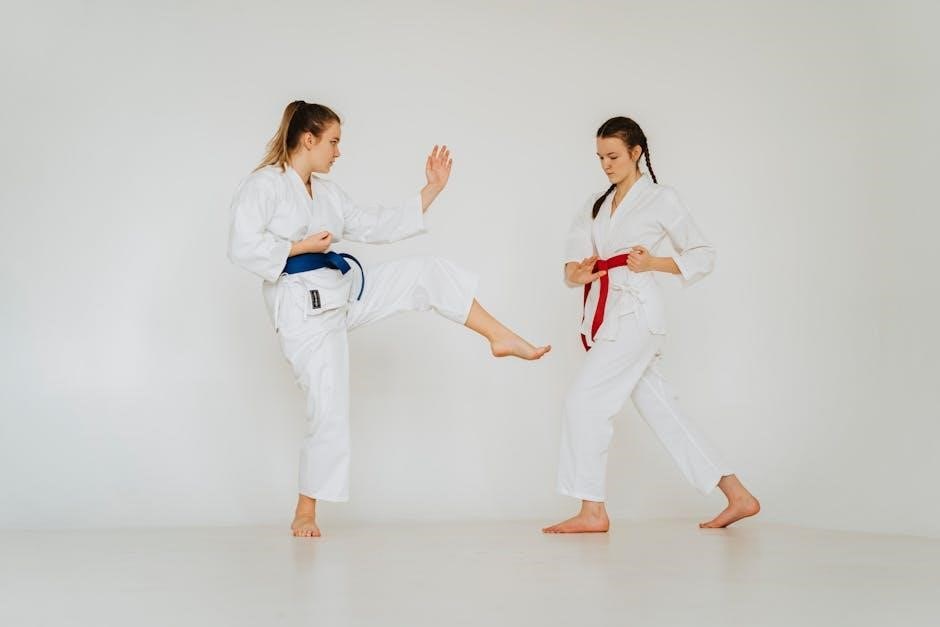
Most beginner gis utilize a middle-weight blend, typically around 8.5oz, offering a balance of comfort, durability, and affordability. These blends, like 45% polyester and 55% preshrunk cotton, minimize shrinkage and maintain shape.
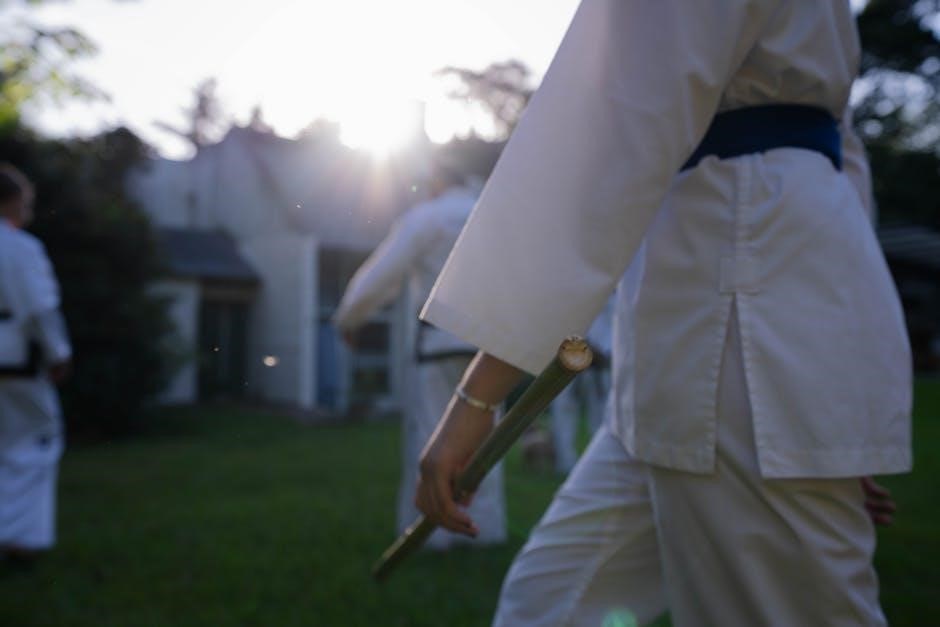
Middle-Weight Gi (8.5 oz) – Ideal for Beginners
An 8.5oz middle-weight gi represents an excellent starting point for new karate practitioners. This weight provides a comfortable balance between durability and flexibility, crucial for learning fundamental techniques. Constructed from a blend of polyester and preshrunk cotton, these gis offer reduced shrinkage compared to 100% cotton options.
They are particularly well-suited for white and yellow belt students, offering affordability and practicality during initial training phases. The elastic waistband ensures a secure, comfortable fit, while side slits enhance mobility during practice.
Key Measurements for Karate Gi Sizing
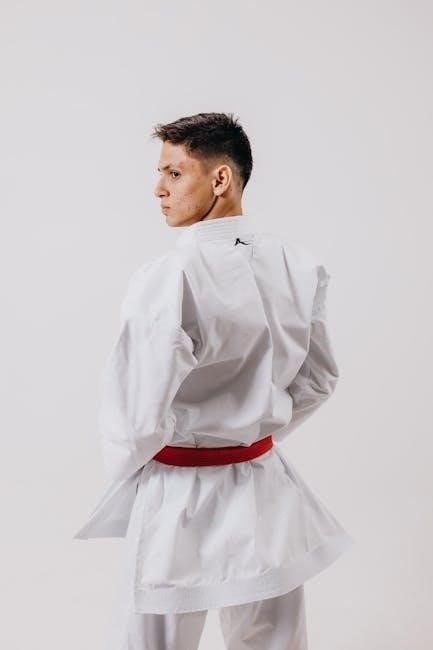
Accurate measurements are paramount when selecting a karate gi. Height serves as the primary factor, but chest/arm span, waist, and inseam are equally vital for a proper fit. These measurements dictate the gi’s overall comfort and allow for unrestricted movement during training and kata performance.
Ignoring these key dimensions can lead to a gi that is either too restrictive or excessively loose, hindering technique and potentially causing discomfort. Precise measurements ensure optimal performance and a secure, functional uniform.
Height as a Primary Factor
Height is the foundational element in karate gi sizing, establishing the initial size range. Manufacturers typically base their charts on height brackets, such as 150cm-160cm. However, height alone isn’t sufficient; it’s a starting point. Individuals within the same height range can have varying body builds.
Therefore, supplementing height with chest, waist, and inseam measurements is crucial. A gi sized solely on height might be too tight or loose. Consider growth for younger practitioners, allowing room for expansion during training.
Chest/Arm Span Measurement
The chest or arm span measurement dictates the jacket’s fit, ensuring freedom of movement during techniques. Measure around the fullest part of your chest, keeping the tape measure level. Alternatively, extend your arms horizontally and measure from fingertip to fingertip – this is your arm span.
Manufacturers often use the maximum arm span (‘A’ measurement) in their size charts. A snug, but not restrictive, fit is ideal. Too tight hinders movement; too loose compromises technique and appearance.
Waist Measurement
Accurate waist measurement is crucial for comfortable pants fit. Measure around your natural waistline, typically just above your hip bones, ensuring the tape measure is snug but not tight. Note both your open and closed waist sizes, as manufacturers utilize both in sizing charts.
Pants often feature elastic or drawstring waists. ‘A’ represents the maximum open waist size, while ‘B’ indicates the closed, tightened waist. Consider your preference and the gi’s intended use when selecting a size.
Inseam/Pants Length Measurement
Precise inseam measurement ensures proper pant length, preventing tripping hazards and allowing unrestricted movement during training. Measure from your crotch to the desired pant hem length, typically around the ankle bone. Wear shoes similar to those used during karate practice while measuring.
Pants Measurement ‘C’ represents the overall length. Ensure sufficient length for kicks and stances, but avoid excessive fabric that could impede performance. Consider potential shrinkage, especially with cotton blends.
Decoding Karate Gi Size Charts
Karate gi size charts are notoriously inconsistent, varying significantly between manufacturers. What appears to be a size 170cm with one brand may fit differently with another. Always consult the specific chart provided by the retailer or manufacturer before ordering.
Understand size ranges, such as 150cm-160cm, indicate the height range the gi is designed for. These ranges offer flexibility, but precise measurements are still crucial for an optimal fit. Don’t assume a size will automatically fit based on height alone.
Variations Between Manufacturers
Each karate gi company employs its own unique sizing system, leading to considerable discrepancies. A “size 180cm” from Young Champions USA won’t necessarily align with the same size from Academy Of Karate. This is why relying on general size assumptions is unreliable.
Measurements for jacket ‘A’ (max arm span) and pants ‘A’ (max open waist) differ across brands. Thoroughly review the individual manufacturer’s chart, paying close attention to their specific definitions of these measurements to ensure a proper fit.
Understanding Size Ranges (e.g., 150cm ⎯ 160cm)
Size ranges, like 150cm ⏤ 160cm, indicate a recommended height spectrum, but aren’t absolute. Karate Dojo waKu suggests 160cm size suits individuals between 150cm and 160cm, allowing for growth and movement. However, body build significantly impacts fit.
Consider your chest and waist measurements within that height range. Someone with a broader build might need to size up, even if their height falls within the lower end of the range. Always prioritize a comfortable, unrestricted fit for training.
Common Karate Gi Sizes and Corresponding Body Types
Karate gi sizing often correlates with general body types, though individual builds vary. Size 140cm typically fits children or smaller adults. 150cm suits youth and early teens, while 160cm accommodates teens or smaller adults.
The 170cm size generally fits average adult males and females. Taller individuals may require 180cm, and those exceeding this height should consider 190cm or larger. Remember these are guidelines; accurate measurements are crucial for optimal fit.
Size 140cm – For Children & Smaller Adults
The 140cm karate gi is designed for children and smaller-framed adults, generally fitting individuals between 130cm and 140cm in height. This size prioritizes comfort and allows for growth in younger practitioners. It’s essential to ensure the gi doesn’t restrict movement during training.
Consider a slightly looser fit for children, allowing room for layering underneath during colder months. Proper sizing ensures safety and encourages confidence during karate practice, fostering a positive learning experience.
Size 150cm – Youth/Early Teens
The 150cm karate gi typically suits youth and early teens, accommodating individuals ranging from approximately 140cm to 150cm in height. This size offers a balance between a comfortable fit and room for continued growth during these active years.
Ensure the gi allows for a full range of motion, crucial for executing karate techniques effectively. A well-fitted 150cm gi promotes confidence and facilitates proper form, supporting the student’s development within their karate journey.
Size 160cm – Teens/Smaller Adults
A 160cm karate gi is generally recommended for individuals measuring between 150cm and 160cm, encompassing many teenagers and smaller-framed adults. This size provides adequate coverage and allows for unrestricted movement during training and kata practice.
Prioritize a gi that doesn’t hinder flexibility, enabling proper technique execution. When uncertain, opting for a slightly larger size within the range is preferable, ensuring comfort and accommodating potential shrinkage after washing.
Size 170cm – Average Adult Male/Female
The 170cm size typically suits average adult males and females, offering a balance between comfort and functionality. Individuals around this height generally find this size provides sufficient length in both the jacket and pants, allowing for a full range of motion during karate techniques.
Ensure the gi isn’t overly tight, restricting movement, or excessively loose, creating a safety hazard. A proper fit allows for dynamic stretching and powerful strikes without constraint, crucial for effective training.
Size 180cm – Taller Adults
For adults exceeding 180cm in height, the 180cm gi size is generally recommended to ensure adequate coverage and comfortable movement. This size prioritizes jacket and pant length, preventing the uniform from riding up during stances or techniques, which is vital for taller practitioners.
Prioritize a proper arm span measurement alongside height, as this dictates the jacket’s width. A well-fitted gi allows for unrestricted execution of kata and kumite, enhancing performance and safety during training sessions.
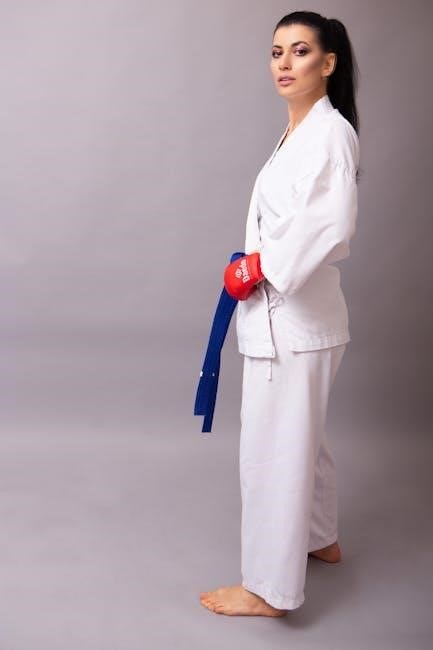
Size 190cm+ – Very Tall Adults
Individuals surpassing 190cm require specialized sizing, often needing gis specifically designed for exceptional height. Standard sizes may fall short in both jacket and pant length, hindering movement and potentially creating a safety hazard during vigorous training.
Careful measurement is crucial; prioritize both height and arm span. Consider custom-made options if standard 190cm+ sizes are unavailable or insufficient. A properly fitted gi ensures full range of motion and prevents restriction, vital for advanced techniques.
How to Measure Yourself for a Karate Gi
Accurate self-measurement is paramount for selecting the correct karate gi size. Begin with height, standing straight against a wall. For chest/arm span, extend arms horizontally and measure tip-to-tip. Waist measurement should be taken at your natural waistline, not over clothing.
Inseam requires measuring from the crotch to the ankle. Record all measurements in centimeters for optimal chart comparison. It’s best to have a partner assist for accuracy, ensuring the tape measure is level and snug, but not tight.
Measuring Height Accurately
Precise height measurement is foundational for gi sizing. Stand tall, with your back against a flat, vertical surface – a wall works well. Ensure your feet are flat on the floor and un-shod. Have a partner use a tape measure, starting from the top of your head to the floor.
Maintain a straight posture throughout the process; slouching will yield an inaccurate reading. Record the measurement in centimeters for compatibility with most size charts. Repeat the measurement a couple of times to confirm consistency and accuracy.
Measuring Chest/Arm Span
Accurate chest or arm span measurement is crucial for jacket fit. For chest, measure around the fullest part of your chest, keeping the tape measure level. Alternatively, extend your arms horizontally, forming a ‘T’ shape, and measure from fingertip to fingertip – this is your arm span.
Ensure the tape measure is snug but not constricting. Record the measurement in centimeters. The jacket’s measurement ‘A’ corresponds to the maximum arm span, influencing overall comfort and range of motion during training.
Measuring Waist
Precise waist measurement dictates proper pants fit. Locate your natural waistline – typically the narrowest part of your torso, above your belly button. Keep the tape measure comfortably snug, not tight, and exhale normally while taking the measurement.
Record this measurement in centimeters. Pants sizing utilizes two waist measurements: ‘A’ represents the maximum open waist size, while ‘B’ indicates the closed waist size with the drawstring tied. Consider whether you prefer elastic or drawstring waists for comfort.
Measuring Inseam
Accurate inseam measurement ensures proper pant length, preventing tripping or restriction during training. Stand straight with feet shoulder-width apart. Measure from the crotch down to where you want the pants to fall on your shoe – typically at the ankle bone.
Record this measurement in centimeters. Pant measurement ‘C’ represents the overall length.
Ensure someone assists you for a precise reading. Proper inseam contributes significantly to unrestricted movement and a professional appearance during karate practice.
Trying on the Gi: Assessing the Fit
Once you have the gi, a proper fit assessment is crucial. Begin by testing your range of motion – perform basic stances, kicks, and punches. Ensure the jacket allows full arm extension without feeling restrictive. The pants should permit a full range of leg movement without binding or excess fabric.
Pay attention to comfort and mobility. A well-fitted gi enhances performance and prevents injury. If unsure, perform movements to test flexibility and confirm a comfortable, functional fit.
Testing Range of Motion
After donning the gi, immediately assess your ability to move freely. Execute fundamental karate techniques – front kicks, punches, and blocks – to identify any restrictions. Can you achieve a full range of motion in your arms and legs without the fabric binding or hindering your movements?
Focus on flexibility. A properly sized gi shouldn’t impede your technique. If movements feel constrained, it suggests the gi is too small; if excess fabric interferes, it’s likely too large.
Jacket Fit – Shoulder and Arm Length
Ensure the jacket’s shoulders lie flat and don’t constrict movement. The sleeves should extend to your wrist with a slight bend, allowing full arm extension without pulling. Jacket Measurement ‘A’, the max arm span, is crucial here.
Check for comfortable reach. When extending your arms fully, the jacket shouldn’t feel tight across the back or shoulders. A snug, but not restrictive, fit is ideal for optimal performance and technique execution during training.
Pants Fit – Waist and Length
The pants should sit comfortably on your waist, secured by either an elastic waistband or a drawstring. Pants Measurement ‘A’ represents the max open waist size, while ‘B’ is the closed size. Ensure a secure fit during vigorous movements.
Length is vital; Pants Measurement ‘C’ indicates overall length. The hem should fall approximately one to two inches above your ankle, allowing for free movement and preventing tripping hazards during practice and kata performance.
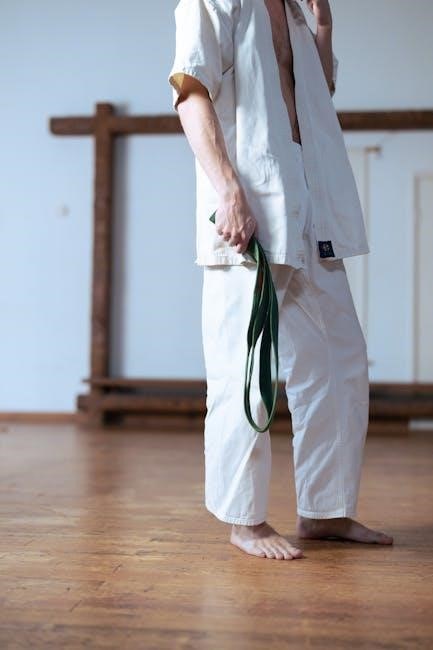
Waistband Considerations: Elastic vs. Drawstring
Karate gi pants commonly feature either elastic or drawstring waistbands, each offering distinct advantages. Elastic waistbands are favored for beginners, particularly children, providing convenience and a comfortable, adjustable fit without needing tying.
Drawstring waistbands offer a more traditional feel and a customizable, secure fit, preferred by experienced practitioners. They allow for precise adjustments, ensuring the pants remain in place during dynamic movements. Consider your preference and training intensity when choosing.
Understanding Jacket and Pant Measurements (A, B, C)
Decoding gi size charts requires understanding key measurements. For pants, ‘A’ represents the maximum open waist size, crucial for flexibility. ‘B’ indicates the closed waist size with the drawstring tied, defining the snug fit. ‘C’ signifies the overall pant length, from waist to hem.
Regarding the jacket, ‘A’ denotes the maximum arm span, ensuring unrestricted movement. Accurate measurements of A, B, and C are vital for selecting a gi that allows for proper technique and comfort during training.
Jacket Measurement ‘A’ ⏤ Max Arm Span
Jacket measurement ‘A’, the maximum arm span, is critical for unrestricted movement. To determine this, extend your arms horizontally, measuring from the tips of your middle fingers on one hand to the tips on the other.
This measurement ensures the jacket allows a full range of motion during kata and kumite.
A properly fitted jacket won’t restrict punches or blocks. Adding a small allowance (1-2 inches) to your measurement provides comfort and accommodates layering during colder training sessions.
Pants Measurement ‘A’ ⏤ Max Open Waist Size
Pants measurement ‘A’ represents the maximum open waist size of the trousers. This is the widest possible circumference when the drawstring is fully released. It’s crucial for ensuring comfortable wear, especially considering potential shrinkage after washing, particularly with cotton blends;
Measure your natural waistline and add a few inches to accommodate the drawstring and allow for comfortable movement during training. This measurement is vital for a secure, yet non-restrictive fit during stances and techniques.
Pants Measurement ‘B’ ⎯ Closed Waist Size
Pants measurement ‘B’ indicates the closed waist size, representing the circumference when the drawstring is tightly secured. This measurement is essential for determining how snugly the pants will fit around your waist after adjustment. It’s a key factor in ensuring the gi remains secure during vigorous training sessions.
Compare this measurement to your actual waist size to assess the level of adjustability offered by the pants. A significant difference suggests a wider range of fit options, accommodating fluctuations in weight or layering of undergarments.
Pants Measurement ‘C’ ⎯ Overall Length
Pants measurement ‘C’ represents the total length of the trousers, from the waistband to the hem. This is a crucial dimension for ensuring the pants reach the appropriate length on your leg, typically around the ankle. Proper length prevents tripping hazards and allows for unrestricted movement during karate techniques.
Accurately measuring your inseam and comparing it to the ‘C’ measurement is vital. Consider slight variations depending on footwear; training barefoot versus wearing shoes may influence the ideal pant length.
Gi Sizing for Different Karate Styles
While a standard sizing approach exists, subtle variations can occur based on the specific karate style practiced. Some styles emphasize a looser fit for dynamic movements, requiring a slightly larger gi size. Conversely, others prefer a more tailored appearance, potentially needing a smaller size.
Consider the requirements of your dojo and instructor. Traditional styles may favor a longer jacket and pants, while more modern approaches might lean towards a contemporary cut. Researching style-specific preferences is recommended.
Where to Find Reliable Size Charts
Locating accurate size charts is crucial, as they differ significantly between brands. Directly consult the manufacturer’s website – Young Champions USA, Academy of Karate, and Martial Arts Supply Inc. are excellent starting points.
Beware of generic charts; prioritize those specific to the gi you intend to purchase. Reputable online retailers often provide detailed sizing guides, including measurements in both inches and centimeters. Always double-check before finalizing your order to avoid incorrect sizing.
Dealing with Shrinkage (Preshrunk Cotton Blends)
Many karate gis utilize cotton blends, often advertised as “preshrunk.” However, some shrinkage is still possible, especially with the initial wash. To minimize this, wash your gi in cold water and tumble dry on low heat or, ideally, hang to dry.
Consider ordering slightly larger if you anticipate significant shrinkage, particularly with heavier cotton content. Following care instructions diligently will help maintain the gi’s fit and longevity, ensuring optimal performance during training.
Resources for Purchasing Karate Uniforms
Numerous retailers specialize in karate equipment, offering a wide range of gis to suit different budgets and styles. Young Champions USA provides traditional middle-weight uniforms, ideal for beginners. Academy Of Karate ⏤ Martial Arts Supply Inc. offers detailed sizing charts and various options.
Online marketplaces like Amazon also carry a selection, but verifying seller reputation and carefully reviewing size charts is crucial. Local martial arts supply stores often provide expert fitting advice and personalized service.